
Introduction
I do full-stack development in Java/Spring Boot and React/TypeScript on an ERP/CRM SaaS platform used by more than 80,000 companies and freelancers. I designed the core of the forms engine and I’m the lead developer of the labelling module, both in production; I co-lead the accounting module with a teammate. I build microservices with hexagonal architecture and DDD and integrate them into a legacy monolith. I work with spec-driven agentic development; at hackathons I’ve built AI agents on Bedrock and Gemini. I’m in my final year of Computer Engineering and hold the eJPT (penetration testing) and ICCA (cloud) certifications.
I’m looking for a backend, full-stack or AI engineering role in a team that uses AI in its product and in its daily work. From Murcia, remote or hybrid, and I can relocate within the EU.
Experience
Software Engineer · STEL Order
Java 21 · Spring Boot · JPA / Hibernate · MySQL · Flyway · Gradle · ArchUnit · React · TypeScript · Vitest · Claude Code
Current
-
No. 01 Labelling module
Built the labelling module from scratch as lead developer, backend to frontend: a visual editor on Konva and labels with 17 barcode formats and data from the ERP, printed in batches to PDF with jsPDF.
Spring Boot · MySQL
View entryHide entry · Labelling module
- Five kinds of label (product, customer, incident, sales order and work order), whose fields are filled with the ERP’s data at print time.
- I moved the editor to Konva: text, barcodes, images, shapes and lines on a canvas, with undo, redo and preview.
- I unified the validation and drawing of 17 1D and 2D barcode formats with bwip-js, from EAN-13 and Code 128 to QR, Data Matrix and PDF417, in a single table, so the code validated in the editor and at print time is the same one that is drawn. The backend always writes the product’s resolved value, so a product without a barcode prints a blank area instead of the template’s sample code, which is real and scannable.
- I implemented batch printing to PDF with jsPDF, per stock unit and warehouse, and the per-warehouse permissions.
- I designed the creation of each company’s five starter templates the first time it opens the module, named in its language, in a single Spring transaction. A primary key in MySQL resolves the race condition between two simultaneous first entries and leaves a single set; if anything fails, it all rolls back, access is not blocked and it retries on the next entry.
-
No. 02 Accounting module
Co-lead the accounting module with a teammate, backend and frontend: chart of accounts, journal entries, the general journal, year-end close, taxes and reports. Designed concurrency-safe, gap-free journal entry numbering per financial year (pessimistic lock in a Spring transaction), the year-end close and reopening, and the audit trail of manual entries. Extended to every slice the ArchUnit suite that enforces its architecture, with a rule that bans the double type for money amounts, and protected its writes against CSRF.
Spring Boot · MySQL · Flyway · ArchUnit
View entryHide entry · Accounting module
- I designed journal entry numbering per financial year, consecutive and gap-free, as the general journal requires. The number is assigned on posting, in the same Spring transaction and under a pessimistic lock on the financial year’s row, so two entries posted at once never get the same number and a rollback leaves no gap. A unique index in MySQL blocks duplicates, and a Flyway migration renumbered the existing entries with ROW_NUMBER().
- I designed the change history of manual entries, written in the same transaction as each action so a rejected action leaves no trace. Automatic entries can only be deleted, posting rejects blocked accounts, and the balances of an imported chart of accounts go into a single opening entry, rejected as a whole if it does not balance.
- I designed the year-end close: a single transaction writes the result entry, the closing entry and the next year’s opening entry, from the entries posted up to its last day rather than the chart of accounts’ running totals. Reopening undoes it in reverse order and is refused if a later year is closed. I also built the general journal, with CSV and Excel export.
- I integrated the module with the ERP over OpenFeign. The module writes each bank’s and payment method’s ledger account back to the ERP, and every entry shows the ERP document behind it. The ERP’s lists are read whole or not at all, because the local copy deletes whatever a read does not return, and an integration test checks that each client’s timeouts apply.
- I decided the architecture: screaming, with vertical slices and hexagonal inside each one.
- The CSRF protection is a filter that rejects cookie-authenticated writes from a foreign origin.
-
No. 03 Forms engine
Designed the core of a dynamic forms engine end to end with Spring Boot and Formio.js, now in production: templates with immutable versions keyed by SHA-256 hash, submissions linked to the ERP’s entities, and a filter chain (Chain of Responsibility) that validates each submission before it is saved. Set up its API test base with JUnit 5, Mockito, REST Assured and Testcontainers, which the team builds on.
Spring Boot · MySQL · JUnit 5 · Mockito · Testcontainers · Gradle
View entryHide entry · Forms engine
- In November 2025 I started the project: domain model, a paginated REST API documented with OpenAPI, and persistence in MySQL. I then split it into backend and frontend and reorganised the backend into screaming architecture with ports and adapters.
- I designed content-based template versioning: each version is identified by the SHA-256 hash of its JSON schema, and every submission stays tied to the version it was filled in against. A unique constraint in MySQL resolves the race condition when two submissions create the same version at once.
- I linked submissions to the ERP’s catalogue, customers, sales, purchases, invoicing and technical service, and to their parent records: a form filled in on a document also appears on its customer or supplier and on its assets, which the backend fetches over OpenFeign behind a port.
- I designed the filter chain (Chain of Responsibility) that validates each submission before it is persisted: Spring beans ordered with @Order that extract dropdown values and check required fields against the schema of its version. Drafts are saved without validation, and the template decides whether it allows them and whether a submission can be edited once sent.
- I set up the API’s test infrastructure: acceptance tests with REST Assured against MySQL in Testcontainers, unit tests with JUnit 5 and Mockito, and two Gradle tasks so unit tests run in parallel and integration tests separately. The tests the team wrote later extend that base.
-
No. 04 Microservices and monolith
Developed the three modules as Java 21 and Spring Boot microservices with hexagonal architecture and DDD, each with its own MySQL database, Flyway migrations and a REST API documented with OpenAPI, and integrated them with the legacy Java 8 monolith through OpenFeign clients.
Java 21 · Java 8 · Spring Boot · MySQL · Flyway · JWT
View entryHide entry · Microservices and monolith
- The OpenFeign clients read and write the monolith’s data, as part of the platform’s gradual move to microservices.
- The ERP opens each module with a JWT, and the OpenFeign clients sit behind a port of the hexagonal architecture.
Projects
-
No. 05 CI/CD Pipeline
Set up Jenkins from scratch with the server and the pipeline as code: a single artifact promoted to staging and production without rebuilding, three Docker environments and a health check after every deployment. Stages: SonarQube, ArchUnit, JUnit, Testcontainers, Cucumber, Playwright and k6, on FlowBoard, a task board I built in Spring Boot, React and PostgreSQL.
Jenkins · Groovy · Docker · Maven · Spring Boot · React · PostgreSQL
View entryHide entry · CI/CD Pipeline
The thesis is the procedure that takes an application from a change on a branch to production. I set up Jenkins from scratch, with the server and the process defined as code and versioned alongside the application. The artifact is built once at integration time, and that same verified binary is what gets promoted to staging and to production, without rebuilding it. There are three containerised environments and, after every deployment, an automatic health check that includes the database connection. The stages run from cheapest to most expensive: static analysis and a quality gate with SonarQube, architecture rules with ArchUnit, unit tests with JUnit and Mockito, integration tests with Testcontainers against a real PostgreSQL, behaviour tests with Cucumber through the API, and system tests with Playwright against the deployed staging environment; load tests with k6 and mutation tests with PIT are scheduled jobs, which report and never block. FlowBoard, a task board in Spring Boot and React, serves as the test bench.
-
Demo of Grabbit (1:23) No. 06 Grabbit
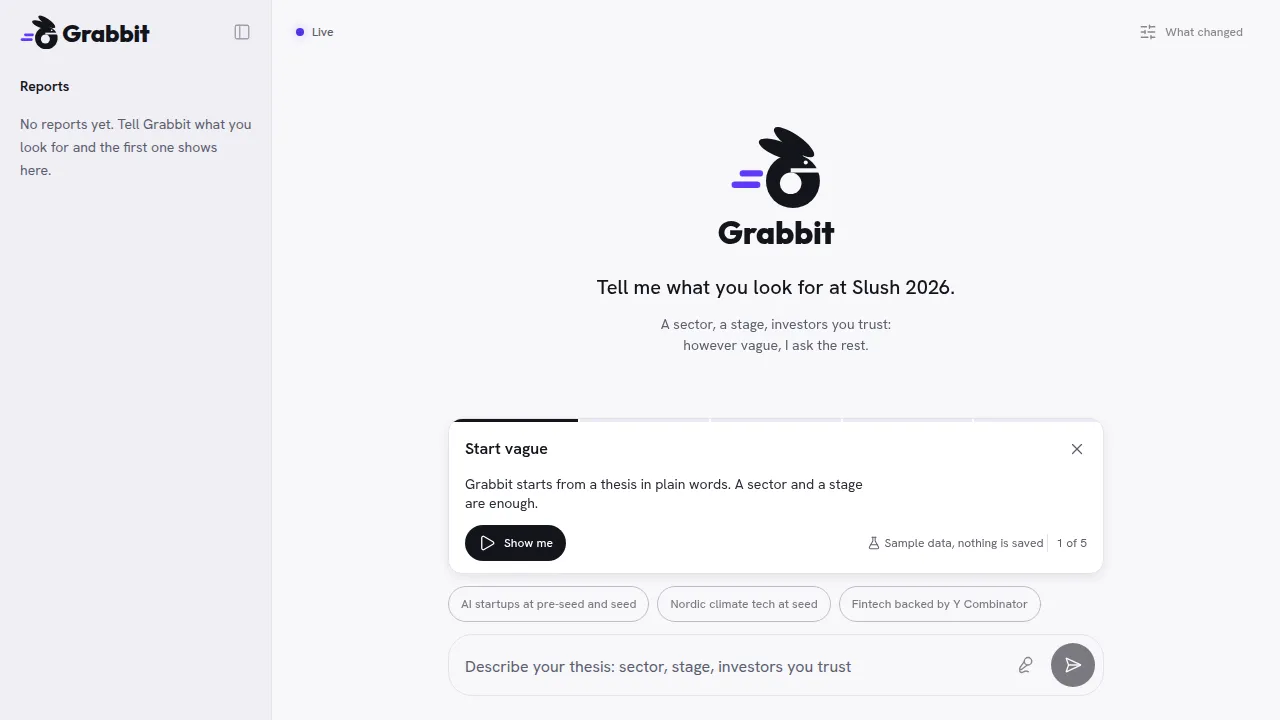
An agent for investors on Cala’s graph, in Python (FastAPI) and React; third out of 37 teams. I built the Cala client with a cache and a rate limiter, the change watcher, the LLM chain (Gemini, Groq) and the deployment to AWS EC2.
Python · FastAPI · pytest · React · TypeScript · Gemini · Valkey · GitHub Actions · AWS EC2
grabbit.cloud(opens in a new tab)Entered in Junction 2026
View entryHide entry · Grabbit
Grabbit prepares a business angel for Slush: among its 2,989 attendees it finds the startups backed by the investors they trust, shows the source of every fact and alerts them when one of those startups moves. Instead of reading the attendee list in order, it walks those investors’ funding rounds in Cala’s graph, and the startups with a trusted investor in their rounds went from 5 to 27. Four of us built it in a weekend, each driving AI agents on our own branch, with more than 100 reviewed pull requests and more than 800 tests.
My part
- I wrote the asynchronous client for Cala’s API (httpx) with a cache, retries on 429 and 5xx, and a shared limiter that holds every call after a 429, because Cala does not publish its rate limit; I tested it with pytest against recorded real responses.
- I built the watcher: every 15 minutes, with APScheduler, it compares each startup on the list with its last snapshot in Cala, scores the change with rules and falls back on the model only when no rule decides; it drops repeats by hash and sends at most 5 alerts a day.
- I chained Gemini, an OpenAI-compatible API (Groq) and a scripted demo that never fails; a provider that fails rests for a minute, and one whose key is refused, for an hour.
- I deployed to AWS EC2 from GitHub Actions with a blue/green switch behind Caddy, without downtime; after the event I moved it to Render’s free plan to keep the demo online.
- I built the five-step guided demo on sample data in React, and isolated each demo visitor in their own workspace.
What I learned
- We talked to two investors before writing code, and the product starts from what they told us: they have no time to look for startups and would rather review a shortlist.
- With four people driving AI agents on separate branches, we reviewed every pull request and ran the tests in CI before merging.
-
Demo of FireDrift (2:29) No. 07 FireDrift
In a team of three, I ran all of AWS as code with CDK: a serverless TypeScript backend (Lambda, API Gateway, DynamoDB, Cognito) and Bedrock AgentCore; wrote the Strands AI agent in Python.
TypeScript · Python · React Native · Vega OS · AWS CDK · AWS Lambda · DynamoDB · Bedrock AgentCore · Strands Agents
GitHub(opens in a new tab)Entered in Amazon Developer Hackathon 2026
View entryHide entry · FireDrift
FireDrift is a Fire TV app for people who don’t know what to watch. A feed shows one title full screen and learns your taste from every press of the remote; an animated AI butler talks to you, suggests titles that TMDB confirms and changes your taste when you ask, with Undo. It is built in React Native for Vega OS, with a serverless AWS backend and an agent on Amazon Bedrock AgentCore; the voice comes from Amazon Transcribe and Polly. Built as a team with José Javier Bravo Sarabia and Francisco Moreno Sánchez; open source (MIT).
My part
- Everything on AWS: the account and the team’s access, the whole stack as code in AWS CDK, the deployments and the live environment for the judges.
- Serverless backend: API Gateway, TypeScript Lambdas on ARM, single-table DynamoDB, Cognito so the TV signs in without an account, and Secrets Manager.
- The butler: a Strands agent in Python on Bedrock AgentCore, with its tools served through AgentCore Gateway (MCP with IAM). It only shows titles TMDB resolved in that same turn.
- The agent’s WebSocket server: answers sentence by sentence, cancelling the running turn, and a fallback to reply buttons when anything fails.
- In the React Native app for Vega OS: the anonymous device profile, the batched signal queue and the timer for each cover, with their Jest tests.
- The recommendation algorithm: it learns from likes, skips, Watch now and time on each cover, with a 14-day half-life, and never calls an LLM; plus the tools the agent uses to change your taste, clamped and undoable.
- The shared contracts (zod schemas and fixtures) that let the three of us work without blocking each other, and cost control: rules checked by tests, a kill switch and choosing Claude Haiku 4.5 over Nova 2 Lite with our own eval.
What I learned
- It was my first time using Bedrock AgentCore and Strands Agents.
- We defined the contracts first (zod schemas and fixtures), so the three of us worked in parallel and plugged in the real service at the end.
- I tested the whole agent loop without Bedrock, with a scripted model behind the Strands Model interface, and used the same prompts to compare models on Bedrock for little money.
- I designed for cost from the start: nothing always on, per-session and daily caps, and a kill switch.
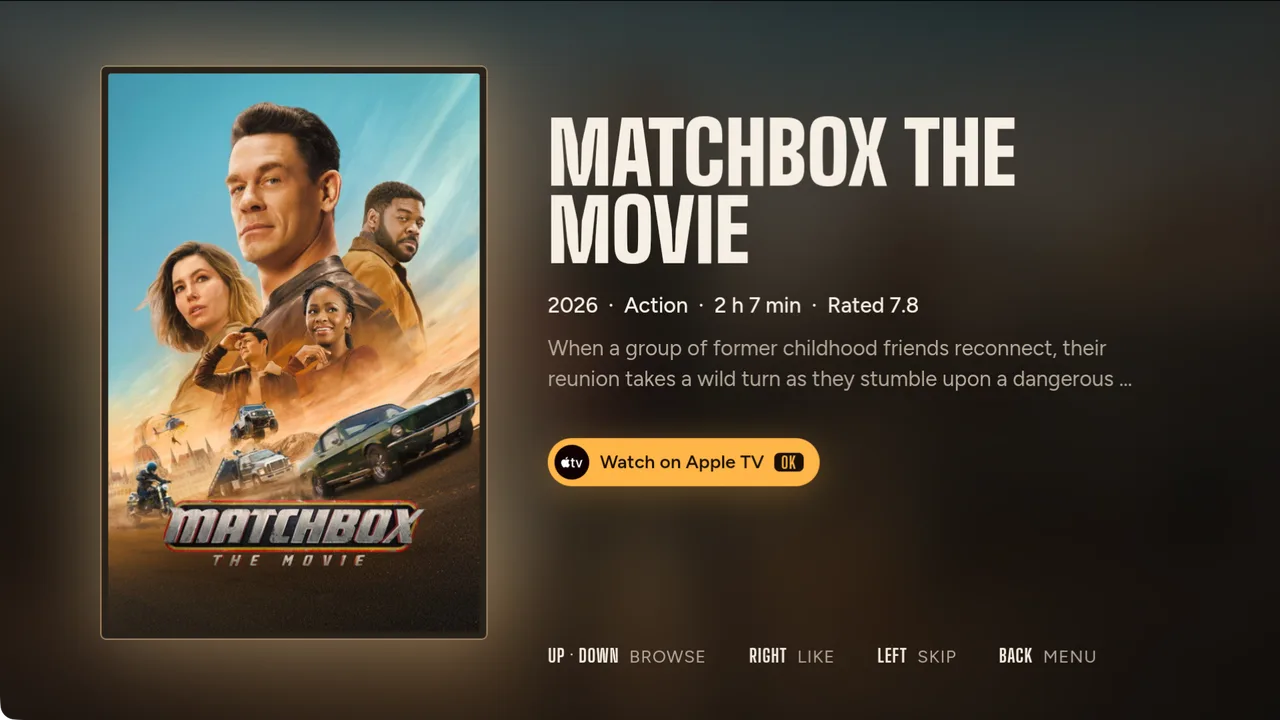
The feed: one title at a time. Right is Like, Left is Skip, OK is Watch now. Posters and data: TMDB. 
Watch now: the services that stream the title, with data from TMDB and JustWatch. 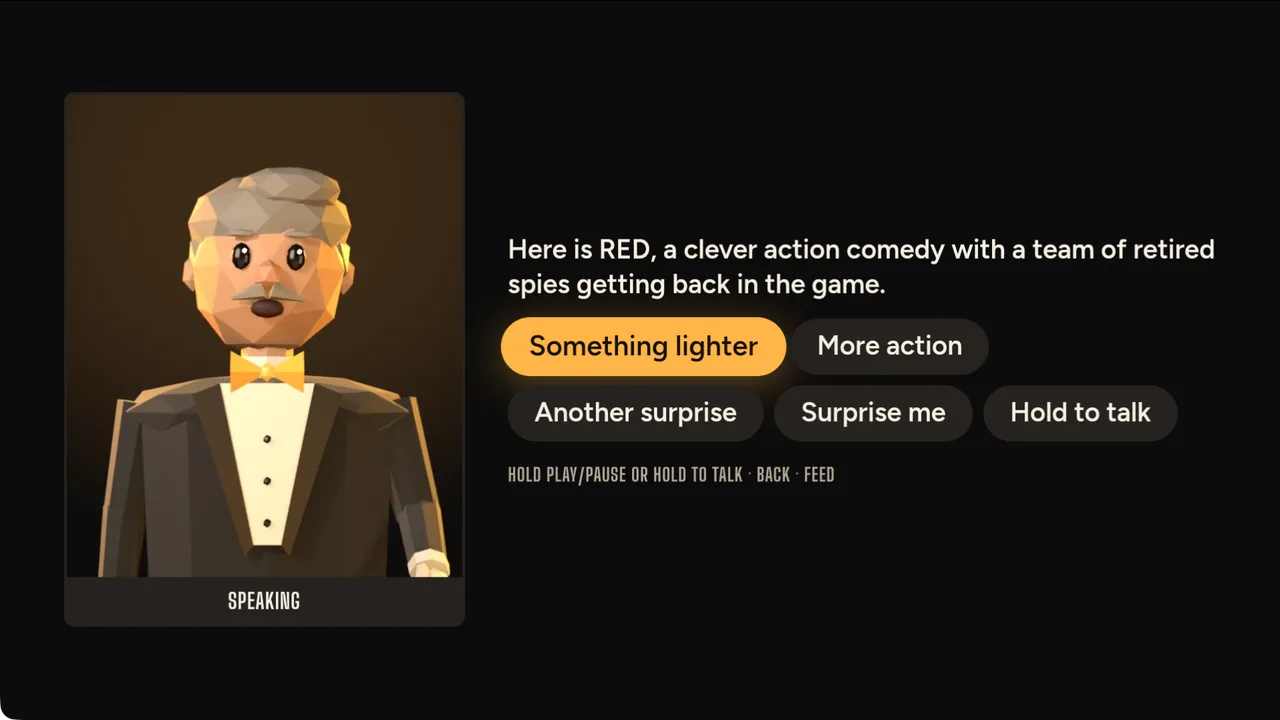
The butler, the team’s own Blender character, answers and offers the next replies as buttons. 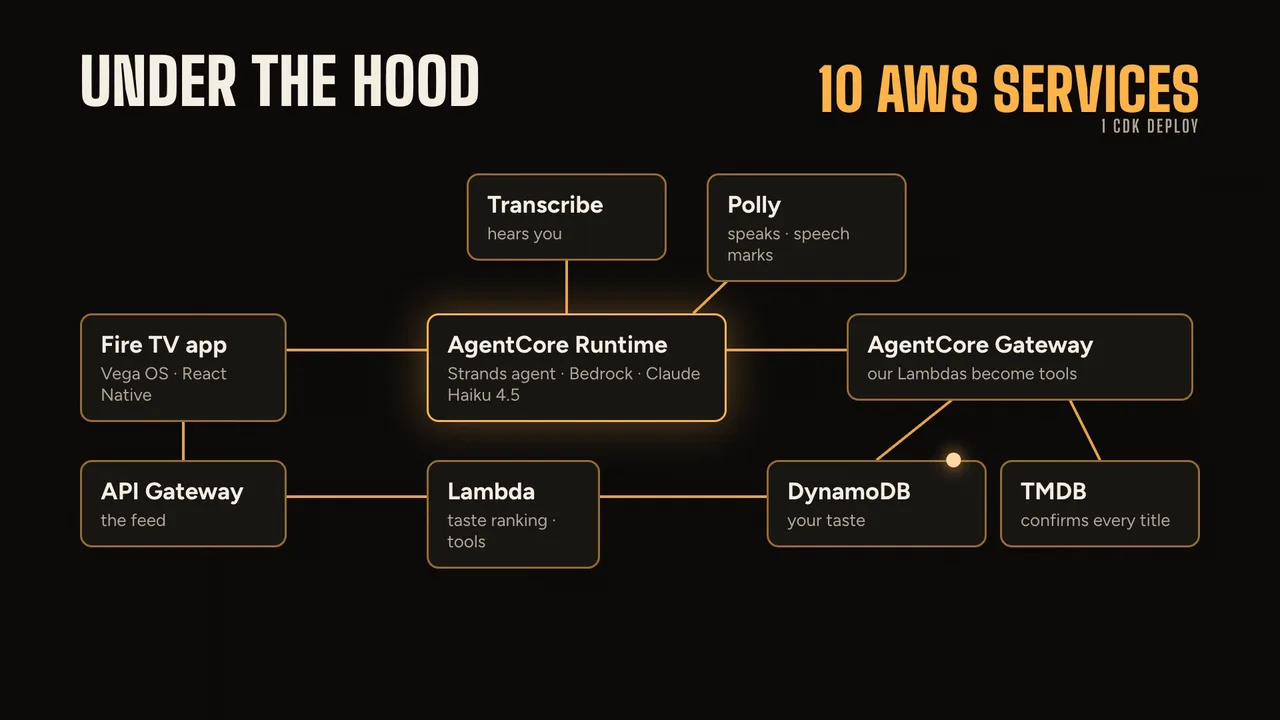
Under the hood: the Strands agent on Bedrock AgentCore, Transcribe, Polly and the Lambdas as tools.
Hackathons & events
-
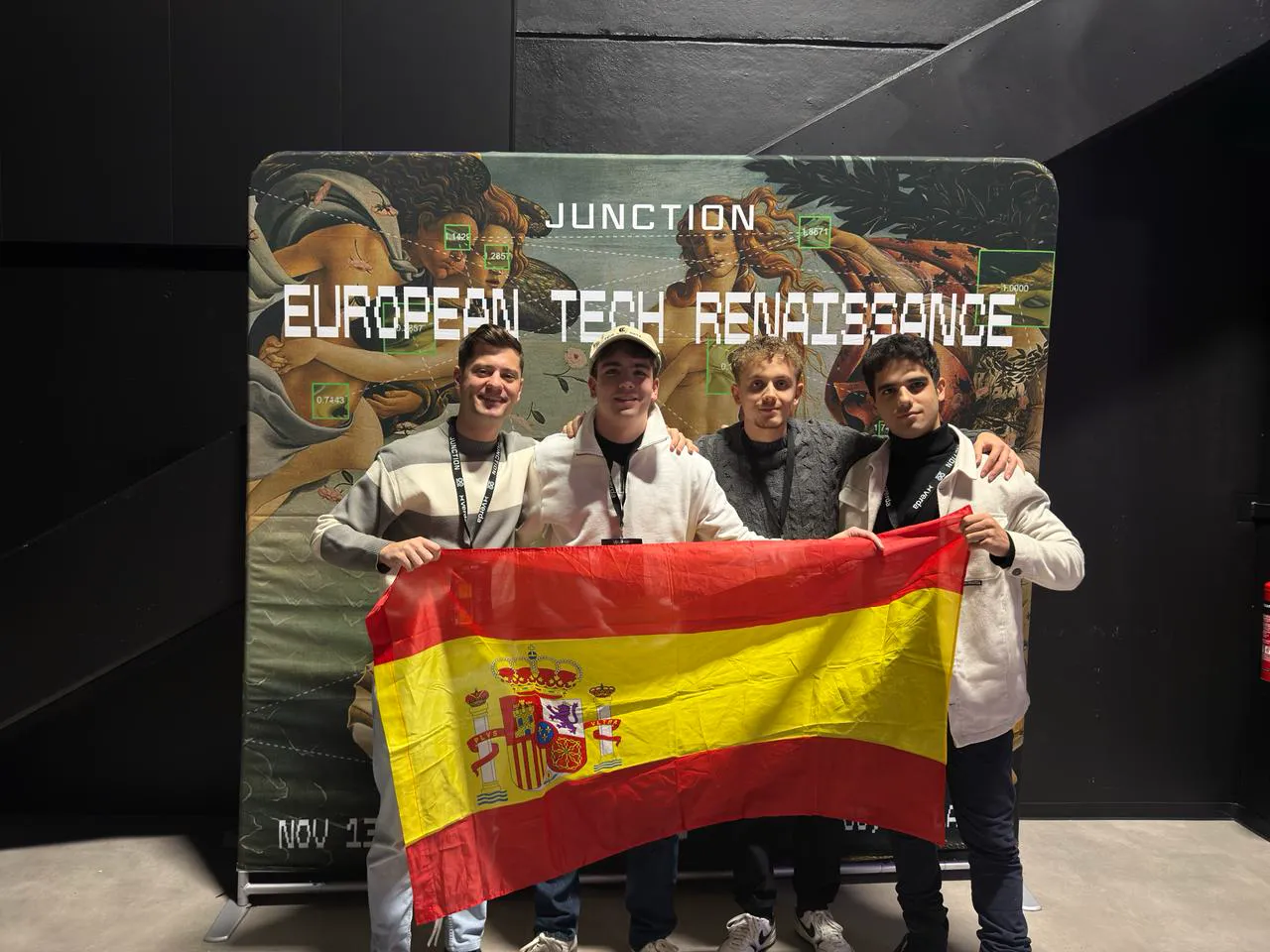
The team at Junction 2026 No. 08 Junction 2026
With Grabbit, third place and a special mention in Cala’s challenge, out of 37 teams
Junction 2026(opens in a new tab)Entry Grabbit
View entryHide entry · Junction 2026
I took part in Junction 2026 with José Javier Bravo Sarabia, Francisco Moreno Sánchez and Rubén Moyano Palazón: 48 hours of building in Espoo with some 2,000 people from more than 100 countries and €100,000 in prizes. We chose Cala’s “Make Unicorns Real” challenge, a graph of companies, investors and funding rounds in which every fact carries its source, and presented Grabbit. We came third out of 37 teams, and Cala gave us a special mention for understanding how a business angel prepares for an event like Slush.
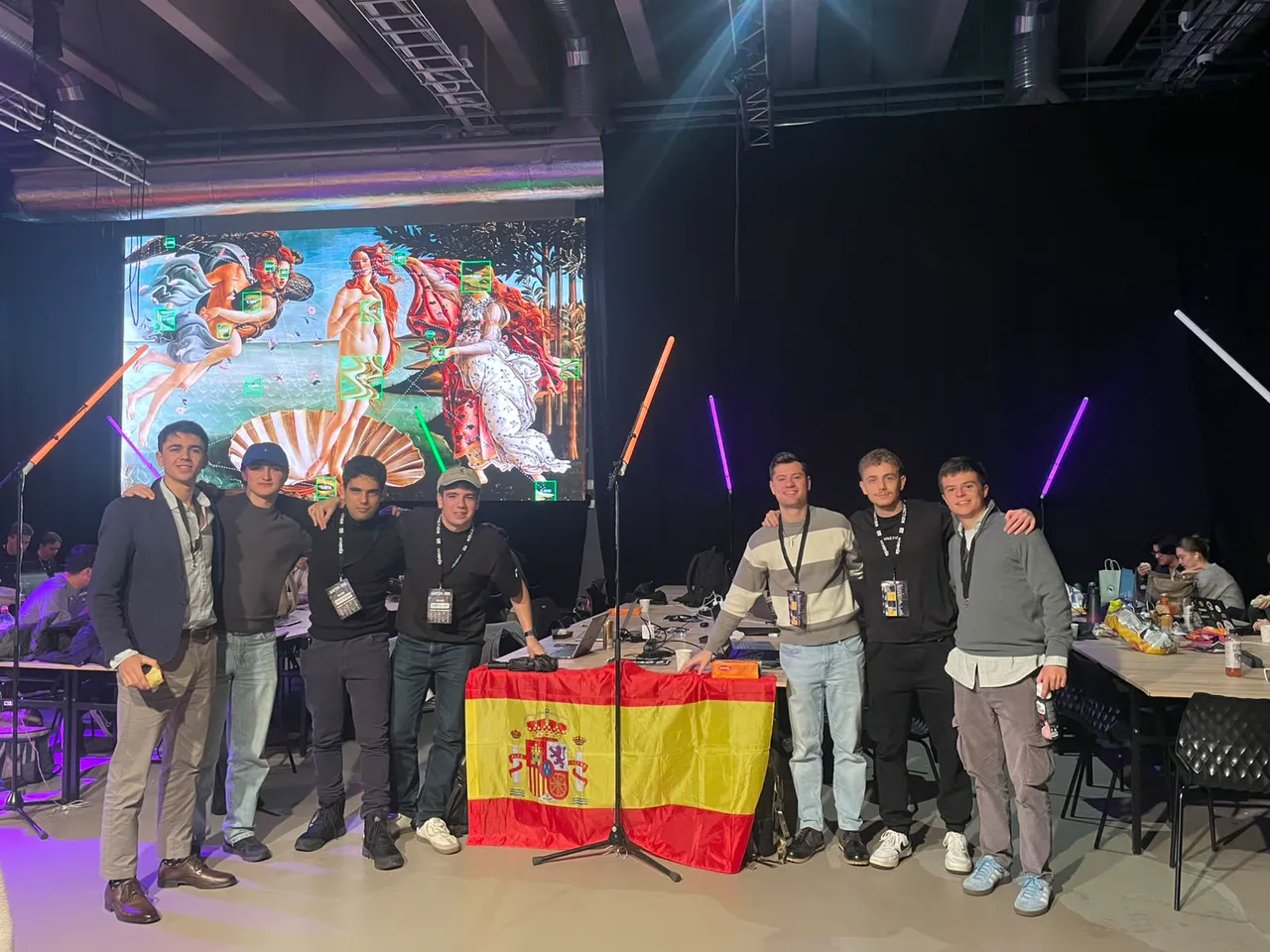
The team’s table at Hype Areena 
At the airport 
Helsinki 
Helsinki -
No. 09 Amazon Developer Hackathon 2026
Build, Ship, Shape · Fire TV track
Devpost(opens in a new tab)Entry FireDrift
View entryHide entry · Amazon Developer Hackathon 2026
An Amazon Developer hackathon with four tracks (Fire TV, Alexa+, Bee and Ring) and two mini challenges, AWS Builder and Open Source. The judges weigh technical implementation, design, potential impact and the quality of the idea equally. We entered FireDrift in Fire TV and in both mini challenges: an app that runs on Vega OS, a demo video under three minutes, the open repository under the MIT licence, product feedback on every tool we used, and our AWS stack live, with prebuilt packages, for the judges to try until 20 November.
My part
- I wrote the whole Devpost submission: the description, the AWS Builder and Open Source sections, the product feedback and the feature requests.
- I filed most of the 18 entries in the friction log on the Amazon and AWS tools, each with steps, expected and actual results, and a suggestion.
- I set up the judges’ environment: the live stack and the instructions to try the app on the Vega simulator.
What I learned
- We started the friction log on day one, and the product feedback in the submission came out of it.
Education
-
No. 10 BSc in Computer Engineering
6 “Matrícula de Honor” distinctions
Average grade 8.43/10
-
No. 11 Baccalaureate in Sciences
“Matrícula de Honor”
Average grade 10/10
Certifications
-
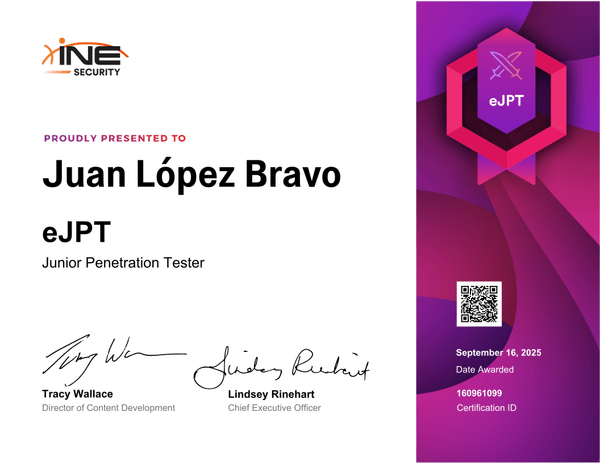
The certificate as issued · INE Security No. 12 eJPT · eLearnSecurity Junior Penetration Tester
Web, host and network penetration testing: reconnaissance, OSINT, exploitation and post-exploitation with Metasploit.
Credential 160961099Verify · eJPT(opens in a new tab)
View entryHide entry · eJPT
- I did active reconnaissance and OSINT to find vulnerabilities and weigh their impact.
- I practised exploitation and post-exploitation on compromised environments with Metasploit and other tools.
- I followed the full cycle of a pentest, from reconnaissance to the report and remediation.
What it certifies: Assessment Methodologies · Web Application Penetration Testing · Host & Networking Penetration Testing · Host & Networking Auditing
-
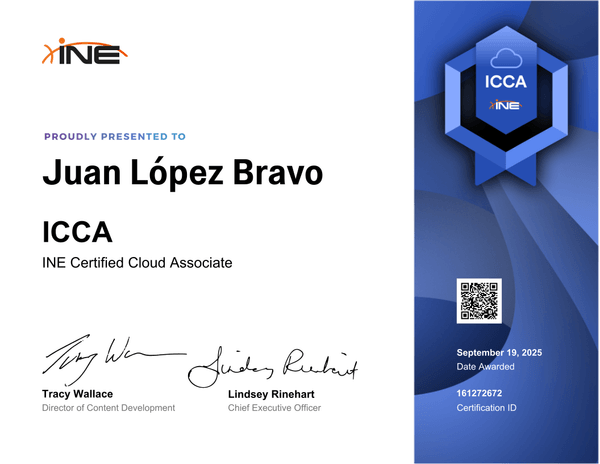
The certificate as issued · INE No. 13 ICCA · INE Certified Cloud Associate
Cloud fundamentals: service models, resource management, security and compliance.
Credential 161272672Verify · ICCA(opens in a new tab)
View entryHide entry · ICCA
- I worked with the main cloud service models: IaaS, PaaS and SaaS.
- I managed cloud resources at an introductory level.
- I studied security and compliance practices: infrastructure protection, identity and data management, and regulatory compliance.
What it certifies: Infrastructure-as-a-Service · Identity and Access Management
Materials · Stack
In bold, what I use in my current job.
- Programming
- Java · TypeScript · JavaScript · SQL · Python · C · C++ · HTML · CSS
- Backend
- Spring Boot · JPA / Hibernate · REST API · JWT · FastAPI
- Frontend
- React · React Native · Vite
- Architecture
- Microservices · Hexagonal architecture · DDD · Clean Architecture · SOLID · Design patterns
- Databases
- MySQL · PostgreSQL · Valkey (Redis) · Oracle · Flyway · Relational modelling
- Testing & quality
- JUnit 5 · Mockito · Testcontainers · ArchUnit · Cucumber · Playwright · Vitest · k6 · SonarQube · pytest · TDD
- DevOps and CI/CD
- Jenkins · GitHub Actions · Docker · Gradle · Maven · Git · Linux · Bash
- Cloud & AI
- AWS Lambda · API Gateway · DynamoDB · Cognito · AWS CDK · Bedrock · Gemini · AgentCore · Strands Agents
- Tools
- Claude Code · Jira · Agile/Scrum · Code review
Languages
- Spanish
- Native · Mother tongue
- English
- C1 (Cambridge Advanced) · Full professional proficiency
- French
- Basic · Basic understanding
How I work
I write it down first.
Before I touch the code, I write down what has to happen: the requirements, how I’ll know it works and the contracts between the parts. If I can’t write it, I don’t understand it yet.
I break it into small steps.
Each change does one thing and says in its message why it was made, so it can be reviewed on its own.
Agentic development, driven by the spec.
The specification and the decisions are mine; the agents implement and I review what goes in.
I check it against what’s written.
Tests, architecture rules and database constraints: what the document promises, the code has to be able to prove.
The document changes with the code.
If a decision changes, so does the requirement or rule that describes it, in the same change.
Information desk · Contact
Juan López Bravo
Murcia, Spain · EU citizen · Open to relocation and remote work
- Phone
- +34 622 27 01 18